
Welcome
What we believe
The Apostles Creed
We believe in one God, the Father Almighty, maker of heaven and earth
and in Jesus Christ, his son, Our Lord, who was conceived by the Holy Spirit, born of the Virgin Mary, suffered under Pontius Pilate, was crucified, died and was buried;
he descended into hell;
on the third day, he rose again from the dead;
he ascended into heaven and is seated at the right hand of God the Father almighty; from there he will come to judge the living and the dead.
We believe in the Holy Spirit,
the holy catholic Church; the communion of saints
the forgiveness of sins, the resurrection of the body, and life everlasting.
Amen.
Our Message
We are bound to share our faith by the great command by Jesus at the Ascension to ‘ Go therefore, make disciples of all the nations, baptise them ‘In the name of the Father and of the Son and of the Holy Spirit.’
Working with our Neighbouring Parishes in Poole – St Joseph’s and Our Lady of Fatima, we aim –
‘To do nothing apart that we could do better together – always to inform, share and invite’ (with thanks to St Edward’s School)
*To submit items for the web site please email the Office through the ‘contact us’ page
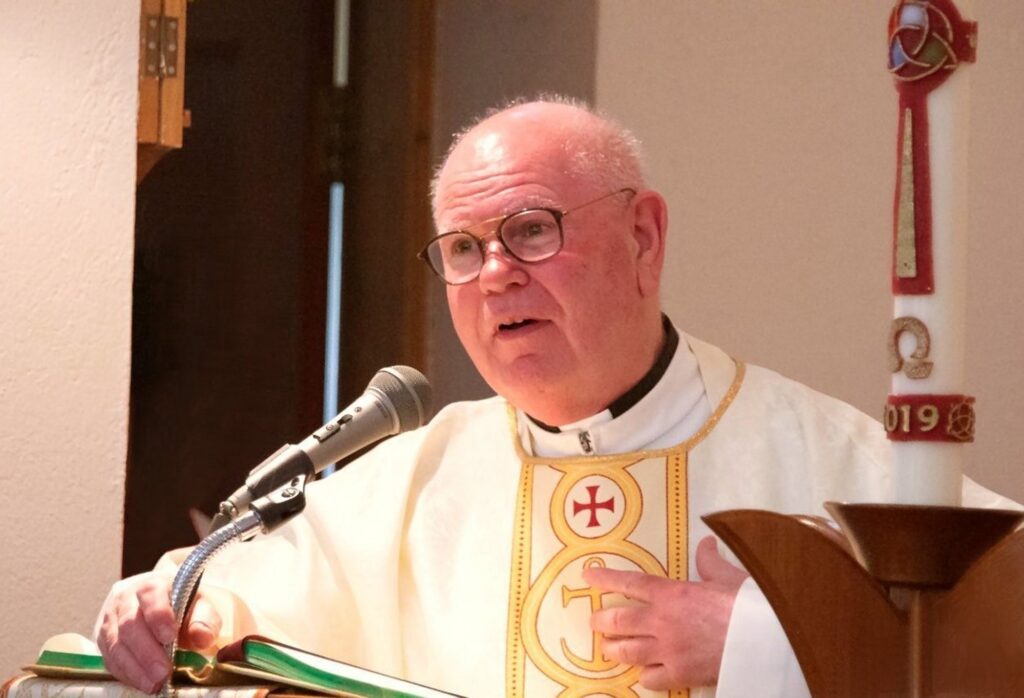
Parish Priest: Canon John Webb, Assistant Priest Fr. James Barber
Retired Priest living in the parish: Canon Denis Collin
Deacons: Rev Declan McConville, Rev Nick Johnson, Rev Robin Watson
Mass Times
To see what time our daily services are, please click the links below.
DOWNLOAD NEWSLETTER
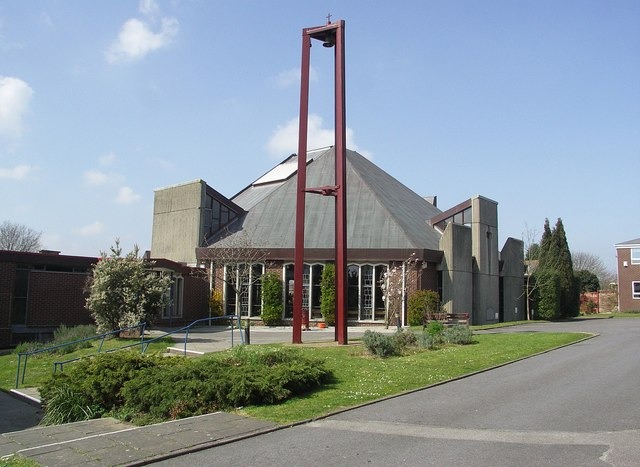
St Mary’s Roman Catholic Church Poole
Built in 1973, St Mary’s is one of the biggest parish churches in the Diocese of Plymouth and has maintained a vibrant Catholic community with lots of children and representing a wide multi-ethnic group from around 37 different nationalities – truly catholic! We want to be welcoming to anyone who stumbles upon us, from wherever they come.
Preparations are underway for the church’s Golden Jubilee in 2023 and fund raising is happening to replace the roof of the church, a target of about a quarter fo a million pounds, that needs to be achieved in the next four years.
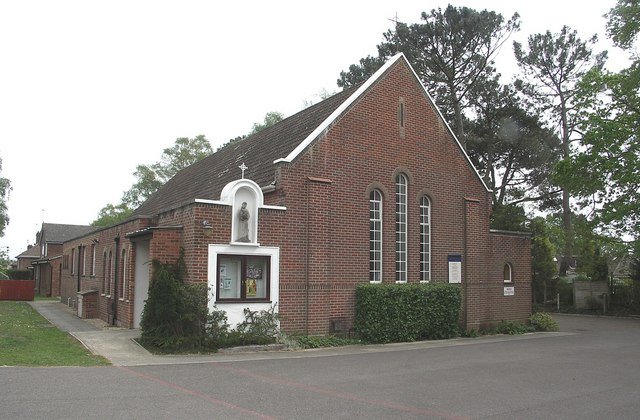
St Anthony of Padua Roman Catholic Church, Broadstone
St Anthony’s was opened in 1958 to accommodate a rising population in the area of north Poole, many of whom were Catholic. The celebration of the Diamond Jubilee was a great flip to all who are parishioners in this small church. Canon Keith Collins RIP was the last priest to exclusively serve this community and since his departure, the community have been served by the priest resident St Mary’s, Poole with a short period of a resident curate until three year ago. Most of the church’s services and sacramental programmes are undertaken in collaboration with St Mary’s but there is a great devotion to sustaining the community and maintaining strong relationships locally, for example the work undertaken with Churches Together in Broadstone.
We reserve this place on our site to highlight charitable causes that appear in the church’s calendar or are of local interest. To save administrative costs of moving money, we will place a direct link where we can, so that if you wish to help, your support will go directly to the charity highlighted and not via any agent by simply clicking on the logo.